






Walk into any salon and ask about hair extensions, and you’ll hear terms like tracks, wefts, hairstyles, and bundles. It can get confusing fast. Understanding the difference helps you choose the right option for your hair.
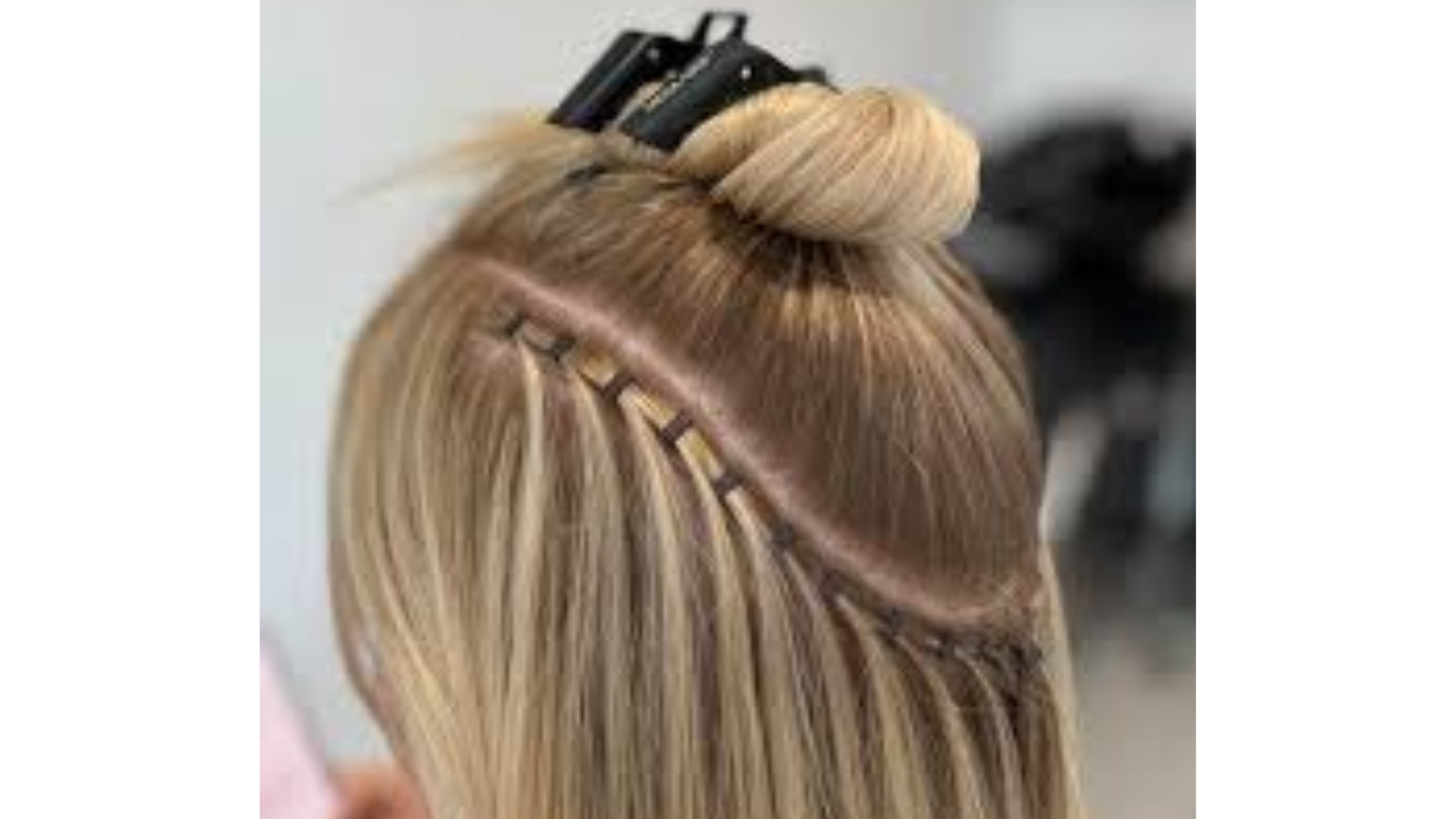
Hair tracks, also called hair wefts, are strands of hair attached to a thin strip of fabric or lace. They can be sewn into your natural hair, adding length and volume without causing damage. When installed properly, they blend naturally and can be styled, cut, or colored just like your own hair.
This guide is based on professional advice and research into installation methods. You’ll learn what tracks are, the types available, how they are installed, and how they compare to clip-in or tape-in extensions. No more guessing or getting overwhelmed by salon terminology.
What Are Hair Tracks?
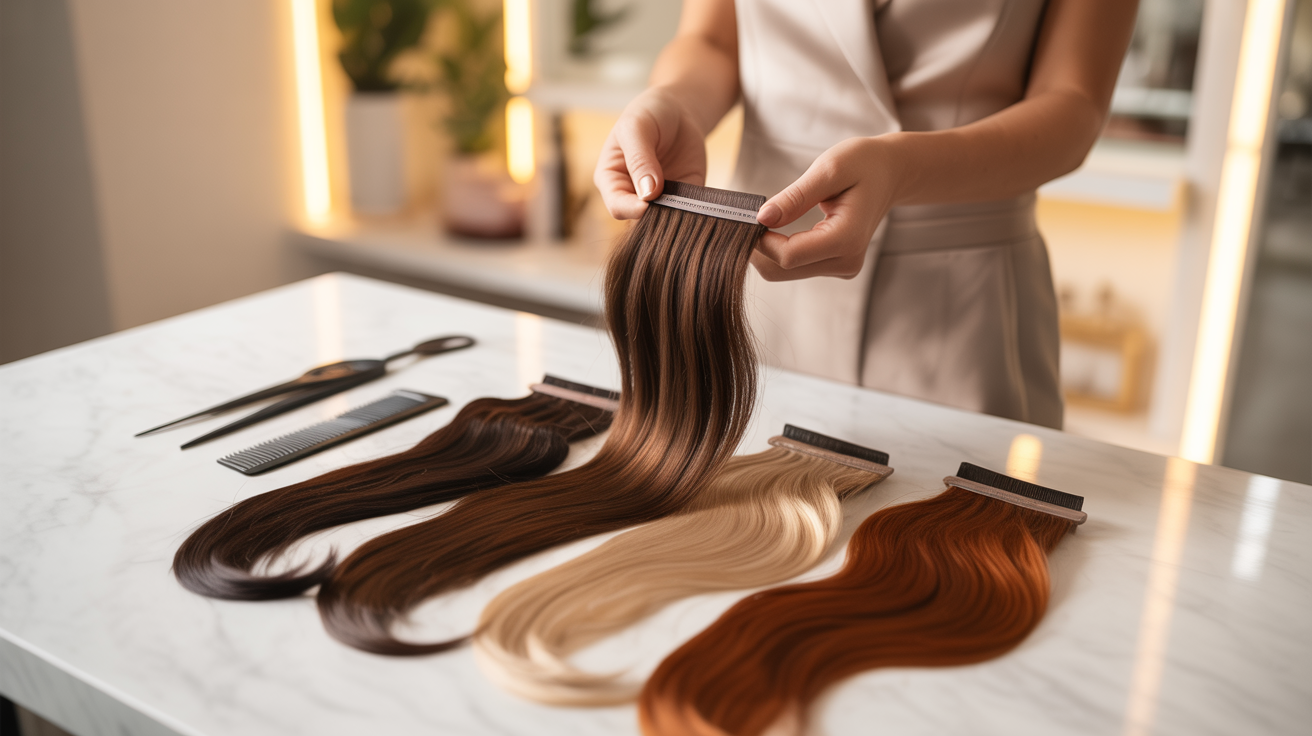
Hair tracks are pre-made bundles of hair attached to a thin strip of fabric or lace, ready to install. Tracks and wefts are the same thing, designed to blend seamlessly with your natural hair.
They come in machine-tied or hand-tied versions, with lengths and thicknesses adjusted before installation.
Machine-tied tracks are consistent and factory-made, while hand-tied tracks are sewn manually for a more natural feel.
Unlike loose hair, tracks have a base strip that makes installation faster and more secure. The weight distributes evenly across your scalp, making it easier to attach compared to individual strands.
Types of Hair Tracks
Not all tracks work the same way. The type you choose affects comfort, cost, and how natural they look. Let me break down your main options.
Machine Tied Wefts
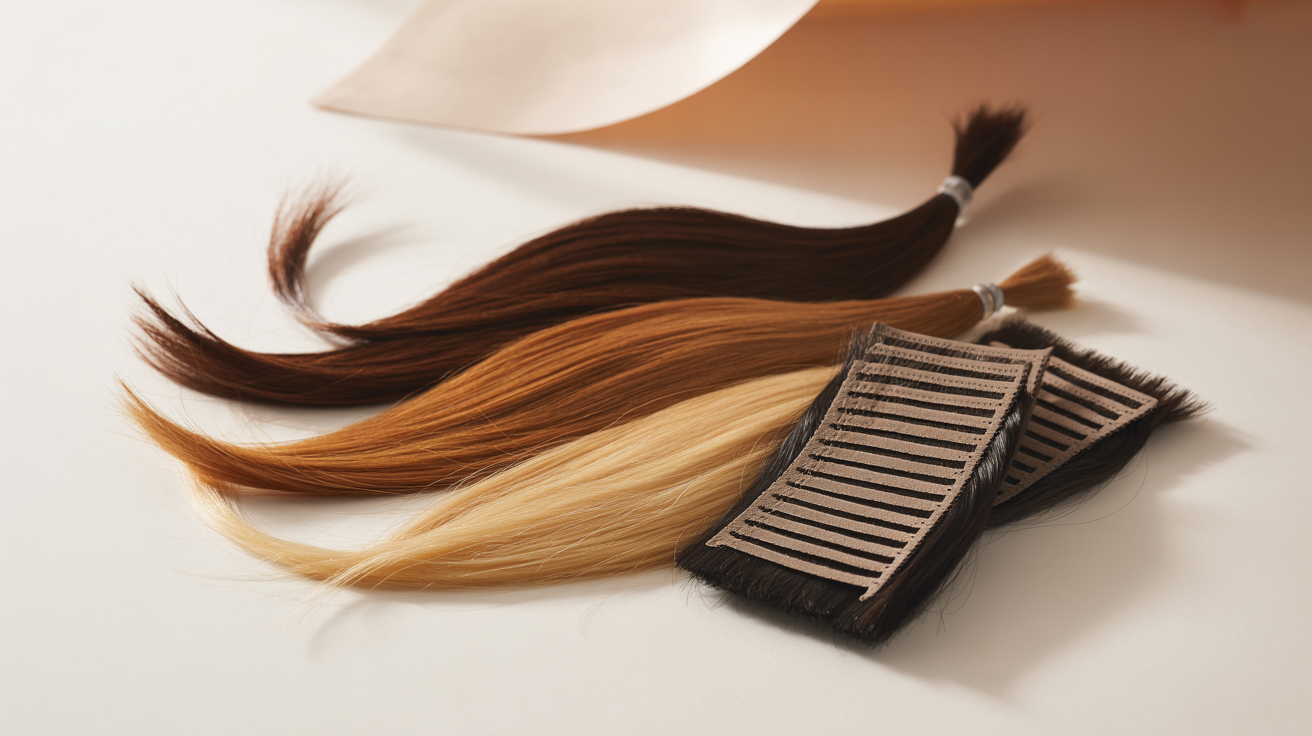
Machine-tied wefts are made with equipment that produces consistent, uniform tracks. They are the mass-produced, more affordable option.
Each track can be cut to the width you need, and the base is slightly thicker than hand-tied wefts. They are durable, long-lasting, and work well for those on a budget.
Hand Tied Wefts
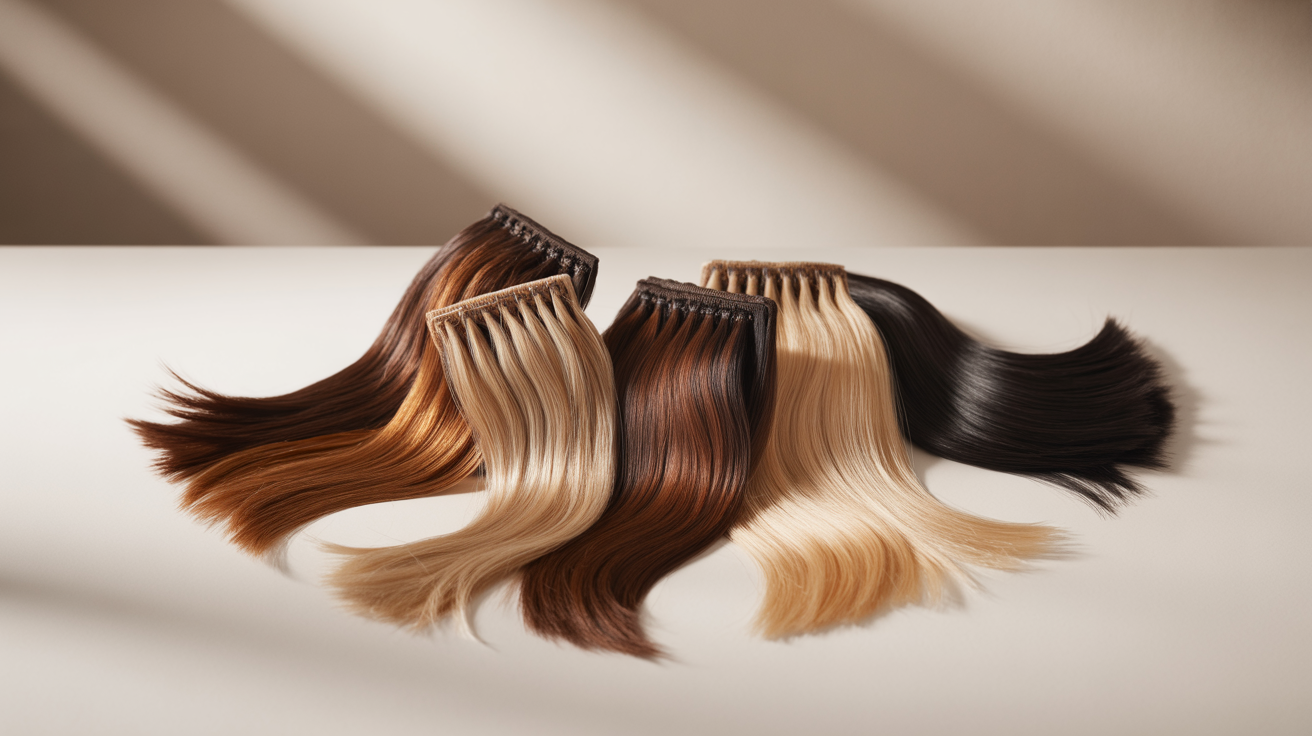
Hand-tied wefts are handmade from human hair, with each track carefully sewn for maximum quality.
They are much thinner than machine-tied wefts, lying flatter and feeling more comfortable on the scalp.
Each piece is typically 6 to 10 inches long with reinforced ends to prevent shedding. They are more expensive but offer the most natural, least detectable result.
Hair Quality Options
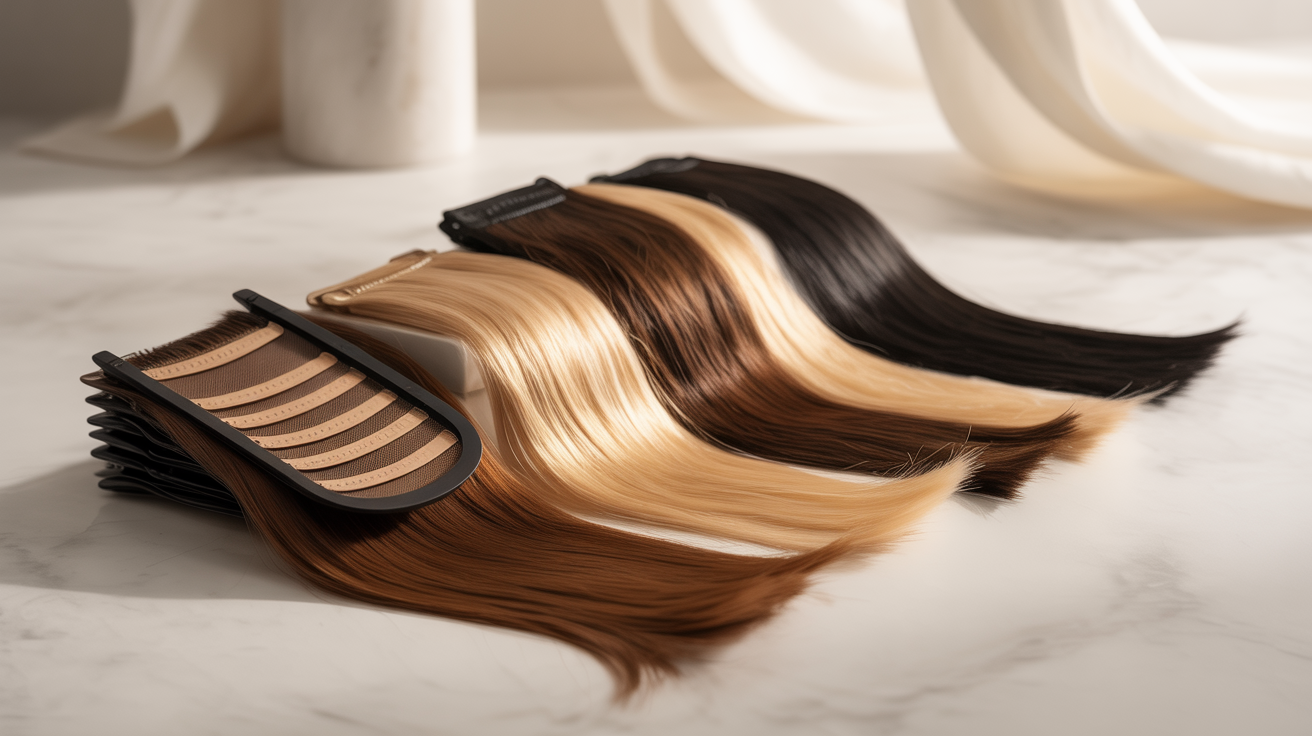
The quality of hair tracks affects how natural they look and their longevity. Slavic hair is premium for thin strands, Russian hair suits medium density, and European hair works for thick or curly textures.
Choose texture and length to match your natural hair, with human hair lasting longer and styling better than synthetic for the most seamless blend.
Hair Tracks vs Other Hair Extensions (Key Differences)
Hair extensions come in so many varieties that it’s easy to get confused about what makes tracks special. Let me show you exactly how tracks compare to your other options.
| Extension Type | Attachment Method | Wear Time / Duration | Installation Difficulty | Pros | Cons |
| Hair Tracks | Sewn into braided cornrows | Weeks to months | Requires a stylist or advanced DIY | Semi-permanent, wakes up with hair done, handles manipulation | Needs careful washing, longer installation time |
| Clip-In Extensions | Small clips attached to hair | Daily/removable | Easy, DIY-friendly | Flexible, can change looks daily, no professional needed | Must apply daily, not semi-permanent |
| Tape In Extensions | Adhesive strips sandwiching natural hair | Weeks | Moderate, no braiding required | Faster install than tracks, lies flatter with less bulk | Needs careful maintenance to preserve the adhesive |
| Fusion Extensions | Keratin bonds are applied strand by strand | Weeks to months | High requires a stylist | Long-lasting, very secure | Expensive, time-consuming, and potentially heat-damaging |
| hairstyle | Hairstyle created using hair tracks | Depends on the tracks used | Stylist required | Full look from tracks | Confused with tracks, dependent on track quality |
Advantages of Using Hair Tracks
Tracks offer benefits that other extension methods can’t match. Let me show you why so many people choose this option.
- Length and Volume Benefits: Tracks provide instant length and thickness, changing short or fine hair into long, full styles in one salon visit. You can control fullness by adjusting the number of tracks.
- Versatility in Styling: Tracks can be cut, colored, and styled with heat tools just like natural hair, allowing ponytails, buns, braids, updos, curls, or straight styles.
- Protective Styling Benefits: Braided natural hair underneath tracks is protected from daily manipulation and heat, reducing breakage and promoting growth.
- Color Without Chemical Damage: Tracks let you experiment with highlights, lowlights, or bold colors without applying bleach or dye to your natural hair.
- Semi-Permanent Convenience: Once installed, tracks last 4 to 8 weeks, eliminating daily styling and letting you wake up with your hair ready.
- Easy Removal Without Damage: Tracks are removed by cutting the thread and unraveling, keeping natural hair intact without harsh chemicals or damage.
Maintaining Hair Tracks
Good maintenance is key to keeping tracks looking fresh. Wrap your hair in a satin scarf or bonnet nightly, use a satin pillowcase, and moisturize your scalp every few days with light oil. Avoid heavy products to prevent buildup.
Wash tracks every one to two weeks by diluting shampoo and focusing on your scalp, then condition ends and air dry or use low heat. Detangle regularly from ends to roots and never sleep with wet hair to prevent tangling and matting.
Tracks typically last four to eight weeks, depending on installation quality and natural hair growth.
Remove them if they loosen, cause discomfort, or after six to eight weeks, and allow your hair a one to two week break before reinstalling.
Potential Issues and How to Avoid Them
Even with ideal installation, problems can happen. Here’s how to recognize and prevent the most common issues.
Tension and Traction Alopecia
Tracks sewn too tightly can cause permanent hair loss. The tension pulls on your hair follicles constantly, weakening them until they stop growing hair altogether.
Tension on your edges is particularly damaging. That fragile hairline can’t handle the same stress as the hair on top of your head. Watch for soreness, bumps, or headaches after installation.
If you experience pain, remove the tracks immediately. Don’t wait. Choose lighter-weight tracks to reduce stress on your scalp. Make sure your stylist doesn’t braid too tightly or sew with too much tension.
Improper Installation Risks
Poorly sewn tracks slip out. Sometimes in embarrassing situations like wind or rain. Uneven braiding creates a lumpy appearance under your hair that looks unnatural.
Tracks that aren’t blended properly show through your natural hair. You’ll see the weft line or the thread. Uncomfortable if the cornrows are too tight, uneven, or poorly placed.
This is why you need an experienced professional for installation. Don’t try complex sew-ins without proper training.
Don’t cheap out and go to someone inexperienced just to save $50. Bad installation costs more to fix than good installation costs upfront.
Damage from Improper Maintenance
Not moisturizing your natural hair underneath leads to dry, brittle hair that breaks easily. Leaving tracks in too long causes severe matting and tangling at the roots.
Rough washing loosens the sewn tracks and can pull out your natural hair. Sleeping without protection creates frizz that makes tracks look ratty. Heavy products cause buildup and add weight that stresses your roots.
Follow the maintenance routine consistently. Every single night, wrap your hair. Every 2 to 3 days, moisturize. Every 1 to 2 weeks, wash carefully. No shortcuts.
Choosing the Wrong Track Type for Hair Type
Heavy tracks on fine, thin hair cause breakage. The weight is too much for fragile hair to support. Mismatched textures look obviously fake. Straight silky tracks on kinky natural hair don’t blend at all.
The wrong color stands out like a spotlight. If the tracks don’t match your natural shade (unless you want contrast), everyone will see them.
Synthetic hair and natural hair don’t blend well together. The textures move differently and reflect light differently. Consult with your stylist about the best track type for your specific hair. Match density, texture, and color as closely as possible.
Professional Installation vs DIY
Can you install tracks yourself? Should you? The answer depends on your skill level and what you’re attempting.
| Topic | Professional Installation | DIY Installation |
| When Recommended | First time getting tracks, complex patterns, full head coverage, unsure about technique, want fast and correct results | Possible with practice, easier with a helper, start with partial installation or a mannequin head |
| Skill Level Needed | High, handled by a trained stylist | High requires learning techniques from multiple tutorials and practicing |
| Time Required | Fast, completed by a stylist | First attempt 6+ hours, faster with experience |
| Tools Needed | Stylist provides all tools | C-shaped curved needle, strong matching thread, rattail comb, hair clips, sharp scissors, edge control or gel, mirror setup |
| Cost | $100 to $300 plus hair | $30 to $50 for tools, cost of hair separately |
| Quality & Safety | Guaranteed quality, minimal risk of damage | Quality depends on skill. Mistakes can be costly and damage hair |
Cost Breakdown for Hair Tracks
Let’s talk real numbers. How much does this actually cost?
- Machine-tied wefts cost $30 to $80 per bundle, while hand-tied wefts range from $80 to $200+, with 2 to 4 bundles needed for a full head.
- Human hair is pricier than synthetic but looks natural, styles better, and lasts longer. Premium options like Slavic, Russian, or European hair cost more.
- Professional sew-in installation runs $100 to $300 for labor, taking 2 to 4 hours, with total cost including hair ranging $250 to $700.
- Maintenance products cost $20 to $50 per month, and salon removal or reinstall every 6 to 8 weeks adds $100 to $250.
- Tracks are mid-range in price, cheaper than fusion, more expensive than clip-ins initially, but longer lasting, and comparable to tape-ins when factoring in installation and hair.
Conclusion
Hair tracks are bundles of hair attached to fabric or lace strips that are sewn into braided natural hair, adding length and volume without stressing your own hair. With proper care, they can last several weeks while keeping your hair protected.
Tracks come in machine-tied and hand-tied types, installed on cornrows, and differ from clip-ins, tape-ins, and fusion extensions in both attachment and longevity. Picking the right type and quality of hair impacts how natural and durable they look.
For your first install, a professional is recommended to ensure the tracks lay flat and secure. Gentle washing, moisturizing, and nightly wrapping help maintain them, keeping your hair healthy and the style looking natural.
Frequently Asked Questions
What are tracks in hair?
Tracks in hair (also called hair wefts) are strands of hair attached to a thin strip of fabric or lace. They’re sewn into cornrows braided flat against your scalp to add length and volume. Tracks can be made from human or synthetic hair and last 4 to 8 weeks.
How are hair tracks installed?
Hair tracks are installed by first braiding your natural hair into flat cornrows. Then a stylist uses a curved needle and thread to sew the tracks onto these braids. The process takes 1 to 4 hours, depending on how many tracks you’re getting. Professional installation is recommended for first-timers.
What’s the difference between tracks and hairstyle?
Tracks are the material (hair attached to fabric strips), while the hairstyle is the finished hairstyle created using those tracks. When someone says “I’m getting a hairstyle,” they mean they’re having hair tracks sewn into their hair. The tracks are the product. The hairstyle is the result.
How long do hair tracks last?
Hair tracks typically last 4 to 8 weeks before needing removal and reinstallation. The exact duration depends on installation quality, your natural hair growth rate, and how well you maintain them. Don’t leave tracks in longer than 8 weeks to protect your natural hair health.
Can you wash your hair with tracks in?
Yes, you must wash your hair with tracks installed to maintain scalp health. Wash every 1 to 2 weeks using diluted shampoo. Focus on cleansing your scalp between the tracks, massage gently, and rinse thoroughly. Avoid rough scrubbing that could loosen the sewn tracks.